Material
Hemp Insulation
Costs, benefits, and how to buy hemp fibre insulation from UK suppliers
6 min readUpdated November 2026
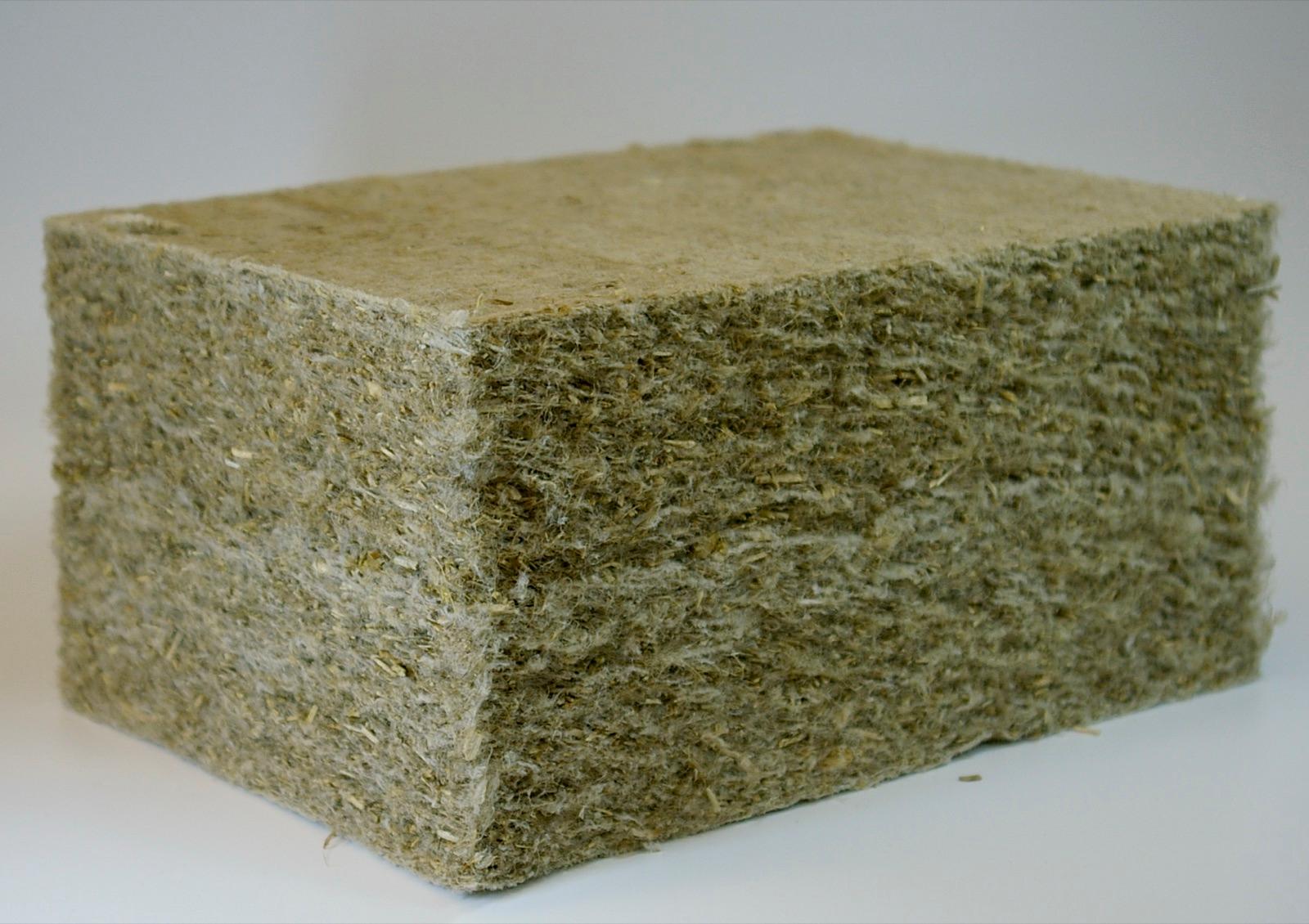
Save guidePhoto: Christian Gahle, nova-Institut GmbH · CC BY-SA 3.0 · Cropped and darkened for display.
What is hemp insulation?
Hemp insulation is made from the fibres in the stalk of the industrial hemp plant. The fibres are formed into flexible batts, rolls, or slabs that fit between timber joists, rafters, and studs. It is a soft, vapour-open insulation, used in a similar way to sheep's wool or flexible wood fibre.
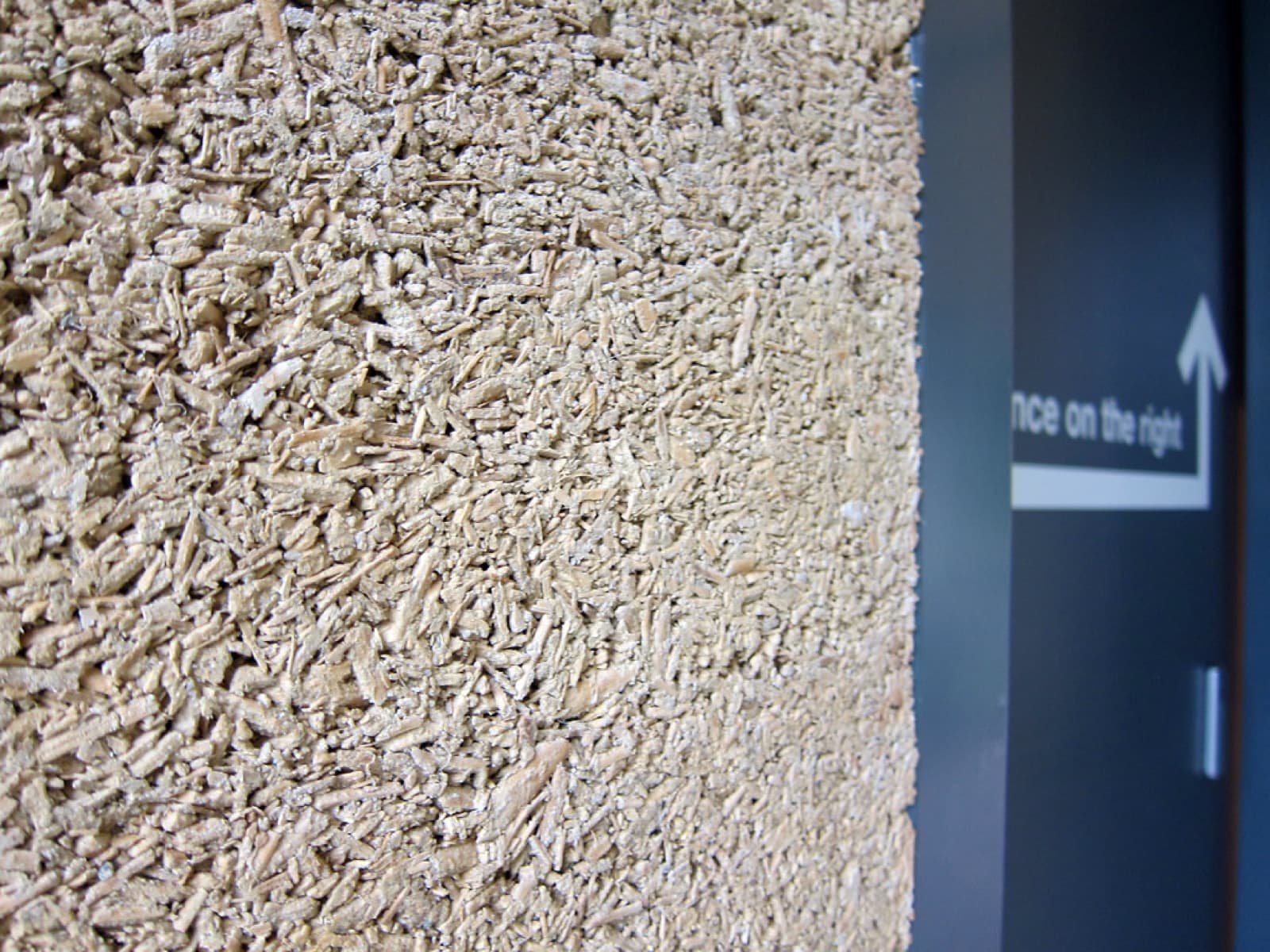
It is not the same as hempcrete. Hempcrete uses the woody core of the stalk (hemp shiv) mixed with a lime binder to make walls or blocks. If that is what you are looking for, read our Hempcrete and Hemp-Lime guide instead.
What is in it?
Most hemp batts are not pure hemp. They usually contain synthetic support or binder fibres, often polyester (PET), which melt slightly during manufacture to hold the mat together. Some also contain other natural or recycled fibres, and a fire retardant such as soda (sodium carbonate) or a phosphate-based treatment.
The mix varies a lot between products, as these published examples show.
| Example product | Stated composition |
|---|---|
| Hemp and jute mat from a German manufacturer | 66% hemp, 22% recycled jute, 8% PET support fibre, 4% soda |
| UK-made hemp slab | 60% hemp fibre, 37.5% recycled content |
| UK-made hemp batt | Made with UK-grown hemp. Binder not stated on the data sheet |
| French-made hemp batt | Hemp, recycled cotton, polyester binder, and a phosphate-based fire retardant |
Note. A higher polyester share is not automatically bad. It can help a batt keep its shape and stop slumping. But it is fossil-based unless stated otherwise, and it makes composting or recycling at end of life harder, so ask what share it is and whether it is recycled.
How does it perform?
Declared thermal conductivity for hemp batts is typically around 0.038-0.042 W/mK. That is similar to other natural fibre insulation, and slightly higher than many mineral wool products, so you need a little more thickness for the same U-value. Always design with the declared value for the exact product.
Hemp is hygroscopic and very vapour open. Published vapour resistance factors are close to that of still air, so it suits breathable build-ups where moisture needs to move through the structure. It can take up moisture from the air and release it again. This does not make it waterproof, and it should be kept dry in storage and use.
| Property | Published examples |
|---|---|
| Thermal conductivity | 0.038, 0.039, and 0.042 W/mK |
| Density | 39-45 kg/m³ |
| Vapour resistance factor (μ) | About 1-2 |
| Specific heat capacity | 1,800-2,300 J/kgK |
| Mould resistance | Level 0 (no growth) to EN ISO 846, for one product |
Fire class and acoustics
Hemp batts commonly declare Euroclass E under EN 13501-1. Some older or UK-only data sheets quote a smoulder test such as BS 5803-4 instead, which is not the same thing, so don't compare them directly. Class E limits where hemp can be used in the external walls of taller and higher-risk buildings. Keep it clear of flues, chimneys, and recessed lights, following the manufacturer's clearance instructions.
Hemp is good at absorbing sound. One product reaches sound absorption class A at 160mm, and another at 100mm. Data sheets also quote sound reduction of around 40 dB, but that figure depends on the whole wall or floor that was tested, not the insulation alone.
Watch out. Fire performance depends on the whole build-up and the building type. Check the product's declared class against Approved Document B for your project, and read our guide to fire performance of biobased materials.
Where it works best
Hemp suits timber structures where a vapour-open build-up is wanted. Flexible batts are not designed to carry render or take load, so they don't replace rigid boards in every position.
Between joists in lofts
Good- Check
- Depth, eaves ventilation, and access for services
Between rafters
Good- Check
- Ventilation gap, friction fit, and airtight layer
Timber frame walls
Good- Check
- Fire strategy, airtight layer, and support against slumping
Suspended timber floors
Good- Check
- Support from below, airflow under the floor, and pest access
Internal partitions
Good- Check
- Acoustic target and stud spacing
Internal insulation on solid walls
Needs care- Check
- Moisture risk assessment and vapour strategy
External wall insulation under render
Usually unsuitable- Check
- Use a rigid board designed to carry render
Tip. Installers usually cut hemp batts with a serrated insulation knife or a wave-blade saw, then friction fit them between the timbers. One manufacturer says its product can be handled without gloves, but recommends a dust mask in enclosed spaces such as lofts.
Carbon: read the numbers carefully
Hemp grows quickly and takes up carbon dioxide as it grows. Some of that carbon stays in the fibre while the insulation is in the building. This is called biogenic carbon.
Because of this, some manufacturers publish a negative carbon figure for manufacturing. That figure usually includes the stored biogenic carbon. The carbon can be released again if the insulation is burned or rots at end of life, so a negative number is not the same as permanent removal.
- Ask for a product-specific EPD, and check whether the figure is self-declared or independently verified.
- Compare manufacturing impacts with and without biogenic carbon, so you are comparing like with like.
- Look at the binder, fire retardant, and transport, which all add impact.
- Ask what the supplier recommends at end of life: reuse, recycling, composting, or energy recovery.
Where UK hemp insulation comes from
Growing hemp in the UK needs a Home Office licence. Each grower and site must be licensed, and only approved seed varieties with very low levels of THC can be sown. The licence covers the fibre and seed, not the leaves or flowers.
Hemp insulation sold in the UK is a mix of imported and UK-made products. Some is made by manufacturers in continental Europe, including Germany and France. Some is now made in the UK from UK-grown hemp, including a product that holds a BBA certificate. Origin affects transport impacts and lead times, so ask where the fibre is grown and where the product is made.
Cost and buying from UK suppliers
Hemp insulation usually costs more per square metre than mineral wool, partly because it is made in smaller volumes. Prices change with thickness, product, and order size, so compare quotes for the same U-value rather than the same thickness.
In the UK, hemp insulation is mostly sold through natural building merchants, insulation specialists, and UK distributors of European manufacturers. A few manufacturers also sell direct. Before you buy, ask:
- What percentage is hemp, and what is the rest? Is the binder fibre recycled?
- Which fire retardant is used, and what is the Euroclass to EN 13501-1?
- What is the declared thermal conductivity, and is there a current Declaration of Performance?
- Is there a BBA certificate, a European Technical Assessment, or other third-party approval for your use?
- Is a product-specific EPD available?
- Where is the hemp grown, and where is the product made?
- What are the lead times, and what is the minimum order?
Using Matera
Matera lists hemp fibre insulation batts, boards, and acoustic products from a range of suppliers. Related listings are shown below this guide. Compare thermal conductivity, thickness, hemp content, binder, and fire class, then ask suppliers for current data sheets, a Declaration of Performance, and any EPD before you order. Information on listings comes from suppliers, so check the documents for your project.
Useful links
Sources
Where the facts in this guide come from. Standards and guidance change, and some sources are suppliers or trade sites, so check the original before relying on a detail.
- Thermo Hemp Combi Jute technical data sheet, February 2026 (HempFlax Building Solutions)Composition including 8% PET and 4% soda, 0.038 W/mK, 39 kg/m³, μ 1-2, 2,300 J/kgK, Euroclass E, sound absorption, mould resistance. Manufacturer source
- Thermo Hemp Combi Jute product page (Thermo Hanf)Recycled PET and bicomponent support fibres. Manufacturer source
- IndiTherm data sheet, 2024 (IndiNature)UK-grown hemp, 0.039 W/mK, 45 kg/m³, μ 1.3, Euroclass E, cutting with wave-form blades, friction fit. Manufacturer source hosted by a retailer
- IndiTherm on NBS SourceSelf-declared negative A1-A3 carbon figure, UK origin and manufacture, BBA certificate 23/7060
- BBA certificate first for UK hemp insulation (IndiNature)BBA certificate for UK-grown and UK-made hemp insulation. Manufacturer source
- Thermafleece NatraHemp factsheet v2, July 202460% hemp, 37.5% recycled content, 0.042 W/mK, 1,800 J/kgK, BS 5803-4 smoulder test, sound absorption, handling advice. Manufacturer source hosted by a retailer
- Isonat (GreenSpec)French-made hemp batt with recycled cotton, polyester binder, and phosphate-based fire retardant
- Low THC cannabis (industrial hemp) licensing factsheet (GOV.UK)Home Office licence for each grower and site, approved seed, and fibre and seed only
Related guides
Material7 min
Best Sustainable Insulation Materials in the UK
Wood fibre, wool, hemp, cellulose, cork, and recycled options compared, and how to choose for each part of the building
Material7 min read
Best Sustainable Insulation Materials in the UK
Wood fibre, wool, hemp, cellulose, cork, and recycled options compared, and how to choose for each part of the building
Concept5 min
How to Compare Insulation Materials
A practical framework for choosing insulation by performance, carbon, and cost
Concept5 min read
How to Compare Insulation Materials
A practical framework for choosing insulation by performance, carbon, and cost
Material4 min
Hempcrete & Hemp-Lime
A carbon-storing insulating wall material
Material4 min read
Hempcrete & Hemp-Lime
A carbon-storing insulating wall material
Material3 min
Sheep's Wool Insulation
How it performs, where it works, and what to check on the label
Material3 min read
Sheep's Wool Insulation
How it performs, where it works, and what to check on the label
Material4 min
Wood Fibre Insulation
A low-impact alternative to PIR and mineral wool
Material4 min read
Wood Fibre Insulation
A low-impact alternative to PIR and mineral wool