
Bio-based Materials
Brannit Fire Rated Wood Fibre Panels
Scandinavian Trading·Byfleet
On request
Request quote
How they compare on cost, thermal and acoustic performance, fire, moisture, and sustainability
9 min readUpdated November 2026
Save guidePhoto: Øyvind Holmstad · CC0
Both are good insulation materials, and neither is the right answer everywhere. Mineral wool is usually cheaper, is non-combustible, and is the default where fire rules are strict. Wood fibre is denser, buffers moisture, and stores biogenic carbon, which suits vapour-open build-ups, roofs at risk of summer heat, and many retrofits.
"Mineral wool" covers two different materials. Glass wool is spun from molten glass, often with a high share of recycled glass, and is typically light, as in loft rolls. Stone wool (also called rock wool) is spun from molten rock and is usually denser. They differ in weight, cost, and carbon, so compare the actual product, not the family name.
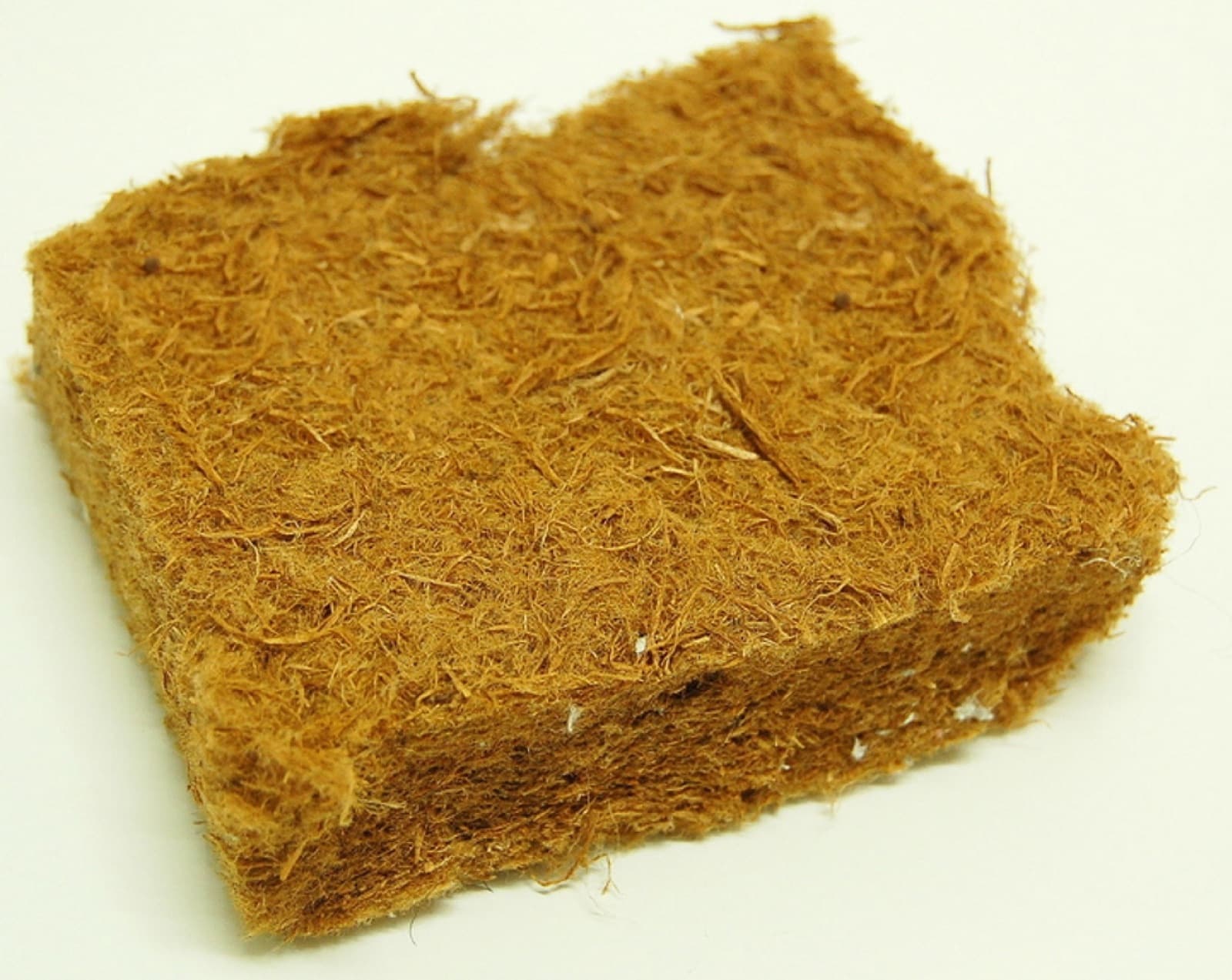
Wood fibre also comes in different forms: light flexible batts for stud and rafter cavities, and denser rigid boards for sarking, sheathing, and render carrier boards.
Thermal conductivity (lambda)
Density
Specific heat capacity
Vapour diffusion resistance (mu)
Moisture buffering
Reaction to fire
Biogenic carbon
Price
Handling
Typical figures from the product examples in this guide. Always use the data for the product you are buying.
On winter heat loss, the two overlap more than people expect. A flexible wood fibre batt can declare 0.036 W/mK, and a wood fibre render board 0.037 W/mK. A stone wool slab may declare 0.035-0.038 W/mK depending on thickness, while a common glass wool loft roll declares 0.044 W/mK. Lower lambda means less thickness for the same U-value.
As a rough Matera calculation, reaching a thermal resistance (R-value) of 4.5 m2K/W takes about 160mm at 0.035-0.036 W/mK, but about 200mm at 0.044 W/mK. So compare the specific products at your target U-value, not "wood fibre" against "mineral wool".
Summer is where they differ. Wood fibre is denser than most mineral wool and declares a higher specific heat capacity, so it stores more heat and slows its passage through a roof or wall. This delay is called decrement delay or phase shift. GreenSpec gives an approximate 12-hour delay for one wood fibre roof build-up.
The Buildwise study measured heat transfer through walls, not indoor room temperature. A Buildwise (Belgium) study calculated a phase shift of about 7.4 hours for 200mm of flexible wood fibre, against about 4.3 hours for 200mm of stone wool.
In full-scale wall tests, though, swapping the insulation made a small difference: about 5% at most in the tested walls. Using a clay board inside instead of plasterboard had a bigger effect. The authors concluded that night ventilation and daytime shading should come first, and insulation type after that.
Note. Specific heat figures for biobased insulation are often generic rather than certified. The same Buildwise paper found only one certified value in a 2022 screening of data sheets, and it was lower than the usual assumption. Treat large decrement delay claims with care and ask how they were calculated.
Both materials are vapour open. Water vapour passes through them easily, so neither acts as a vapour barrier. The difference is that wood fibre is hygroscopic: it takes up moisture vapour into the fibres when the air is humid and releases it when the air is dry. Mineral wool takes up very little.
This buffering is one reason wood fibre is popular in breathable retrofit build-ups, especially with lime or clay plasters. It is not a cure-all. In the Buildwise tests, an OSB board inside the insulation did most of the buffering, and the biobased insulation behind it made little difference to indoor humidity. What finishes the room side matters as much as the insulation.
Neither material should get wet from rain, leaks, or rising damp. Wet mineral wool loses insulating performance until it dries. Wood fibre tolerates some moisture swings, but prolonged wetting can damage it. Both last for the life of the building if the build-up is designed and detailed to stay dry.
Tip. For internal insulation on solid walls, or any build-up where you are unsure about condensation, ask for a hygrothermal assessment of the whole wall rather than relying on the insulation being "breathable".
This is the clearest difference. Mineral wool products are typically Euroclass A1, the non-combustible class. A common stone wool slab and a common glass wool loft roll both declare A1. Wood fibre insulation is combustible and typically Euroclass E.
A combustible insulation is not automatically unsafe. Many houses use wood fibre behind plasterboard or render, and the performance of the finished build-up matters. But the class does rule wood fibre out of some uses in England.
Watch out. This is a summary of guidance for England only. Wales, Scotland, and Northern Ireland have their own rules. Confirm the design with your building control body or a fire engineer, and see our guide to fire performance of biobased materials.
Both are porous fibrous materials, so both absorb sound in a cavity. For blocking sound between rooms or homes, mass and the way the construction is separated matter more than the insulation itself.
Mineral wool has a practical advantage for party walls and separating floors. The example constructions in Approved Document E name mineral wool as the absorbent layer, with a minimum density of 10 kg/m3. If you use another material, you are moving away from those examples and should expect to need test evidence for the actual construction.
Wood fibre can still help. Dense wood fibre boards add mass, which helps against airborne and low-frequency noise. Ask for tested results for the full construction rather than relying on general claims.
Two different numbers get mixed up here. Fossil emissions in modules A1-A3 are the emissions from making the product. Biogenic carbon is the carbon the trees took from the air, now stored in the wood fibre. EPDs to EN 15804+A2 report the two separately, and you should keep them separate when comparing.
The two EPD examples below show why. Per square metre at the same thickness, this glass wool product has lower fossil emissions than this wood fibre batt. The wood fibre batt stores more biogenic carbon than its fossil emissions, so its A1-A3 total comes out negative.
Flexible wood fibre batt, 50 kg/m3 (STEICOflex)
About 2.8 m2K/WGlass wool loft roll (Knauf Loft Roll 44)
2.25 m2K/WMatera calculation from two manufacturer EPDs, scaled to 100mm. Different products and factories will give different results.
Tip. Compare carbon per square metre at your target U-value, and keep fossil and biogenic figures in separate columns. Our embodied carbon guide explains the life cycle modules.
Mineral wool is usually the cheaper option, especially glass wool loft roll. Published UK price guides vary a lot. One 2026 cost guide puts fitted wood fibre board at roughly two to three times the price of mineral wool quilt, but it compares a rigid board with a roll, which is not like for like. Get quotes for the same U-value and the same application, including labour, membranes, and fixings.
Handling is different. Mineral wool fibres can cause temporary itching on skin, throat, or eyes, so manufacturers advise gloves and covering exposed skin. Wood fibre does not itch in the same way, but cutting it makes wood dust, which can cause asthma. Use dust extraction and suitable respiratory protection when cutting either material for any length of time.
Wood fibre batts can be cut with a handsaw or insulation knife and friction-fitted between studs. Wood fibre boards are heavier than mineral wool, which matters on scaffolds and in lofts.
| Topic | Detail |
|---|---|
| Wood fibre end of life | Depending on binders and additives, it may be reused, recycled, composted, or burned for energy recovery. Check the manufacturer's guidance. |
| Mineral wool end of life | It can be recycled into new mineral wool, and factory offcuts are commonly recycled. Ask whether a take-back scheme covers your area, as site waste is often harder to recycle. |
| Recycled content | Glass wool can contain a large share of recycled glass. Ask for the declared percentage for the exact product, as published figures for the same product can differ. |
Use this as a starting point. The right choice depends on the whole build-up, the budget, and the rules that apply to your building.
Loft, between and over joists
Pitched roof at the rafters
Timber frame walls
Internal insulation on solid walls
External wall insulation (render board)
Party walls and separating floors
Strict fire requirements, such as residential external walls 11m and above
Ask each supplier for the declared lambda at your thickness, the density, and the BS EN 13501-1 fire classification report. For carbon, ask for a product EPD with fossil and biogenic carbon reported separately, and where the product is made.
For mineral wool, ask whether it is glass or stone wool and its recycled content. For wood fibre, ask for FSC or PEFC certification. Then compare installed prices for the same U-value, not the price per pack.
Where the facts in this guide come from. Standards and guidance change, and some sources are suppliers or trade sites, so check the original before relying on a detail.
A low-impact alternative to PIR and mineral wool
A low-impact alternative to PIR and mineral wool
A practical framework for choosing insulation by performance, carbon, and cost
A practical framework for choosing insulation by performance, carbon, and cost

What Euroclasses mean, what Part B asks for, and how to specify timber, hemp, and natural insulation safely
What Euroclasses mean, what Part B asks for, and how to specify timber, hemp, and natural insulation safely

Lower-impact insulation options, and when to specify each one
Lower-impact insulation options, and when to specify each one

What it is, why it matters, and how to reduce it through better material choices
What it is, why it matters, and how to reduce it through better material choices