Reclaimed & Salvaged Materials
How to source, grade, and specify secondhand building materials
7 min readUpdated April 2026
Save guideWhy reclaimed materials matter
Every tonne of reclaimed material avoids the embodied carbon of manufacturing a new one. Reclaimed bricks save roughly 0.24 kgCO2e per brick compared to new. Reclaimed steel avoids up to 1.46 kgCO2e/kg. Beyond carbon, reuse keeps materials out of landfill and preserves craftsmanship - handmade bricks, old-growth timber, and period ironwork that cannot be reproduced today.
The UK demolishes around 50,000 buildings per year. Most of that material ends up as aggregate or landfill. Thoughtful deconstruction and resale can recover high-value components at a fraction of the environmental cost of new production.
Reclaimed materials also carry character. Weathered timber, patinated metal, and hand-thrown bricks bring texture and history to new projects in ways that factory-fresh alternatives cannot replicate.
What can be reclaimed
Structural timber is the most commonly reclaimed material in the UK. Oak, pitch pine, and Douglas fir beams from industrial buildings, barns, and warehouses are routinely recovered, re-graded, and resold.
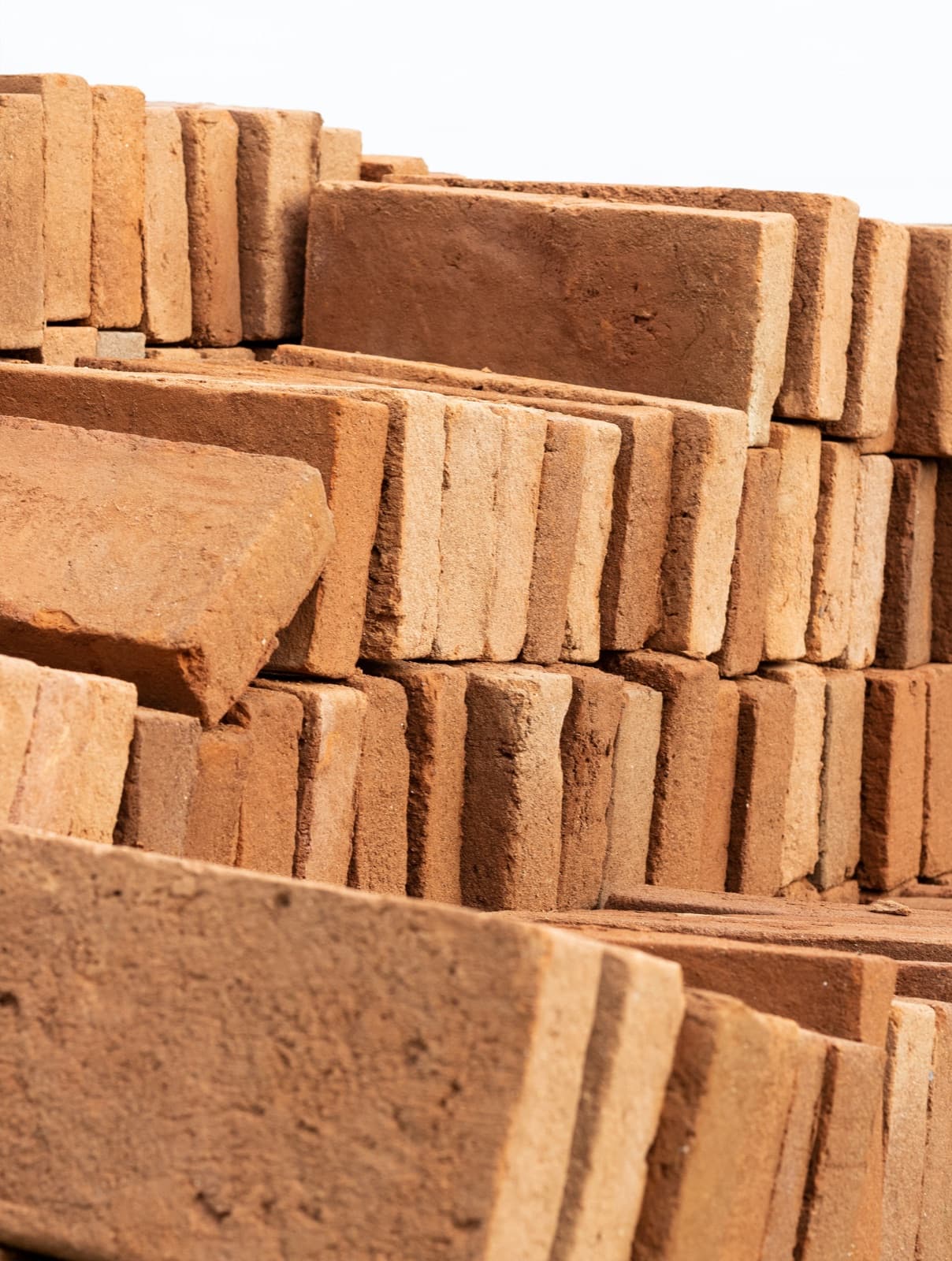
Bricks are another staple - particularly London stocks, Staffordshire blues, and handmade varieties. Reclaimed bricks are cleaned, sorted by quality, and sold by the thousand.
Other commonly reclaimed materials include:
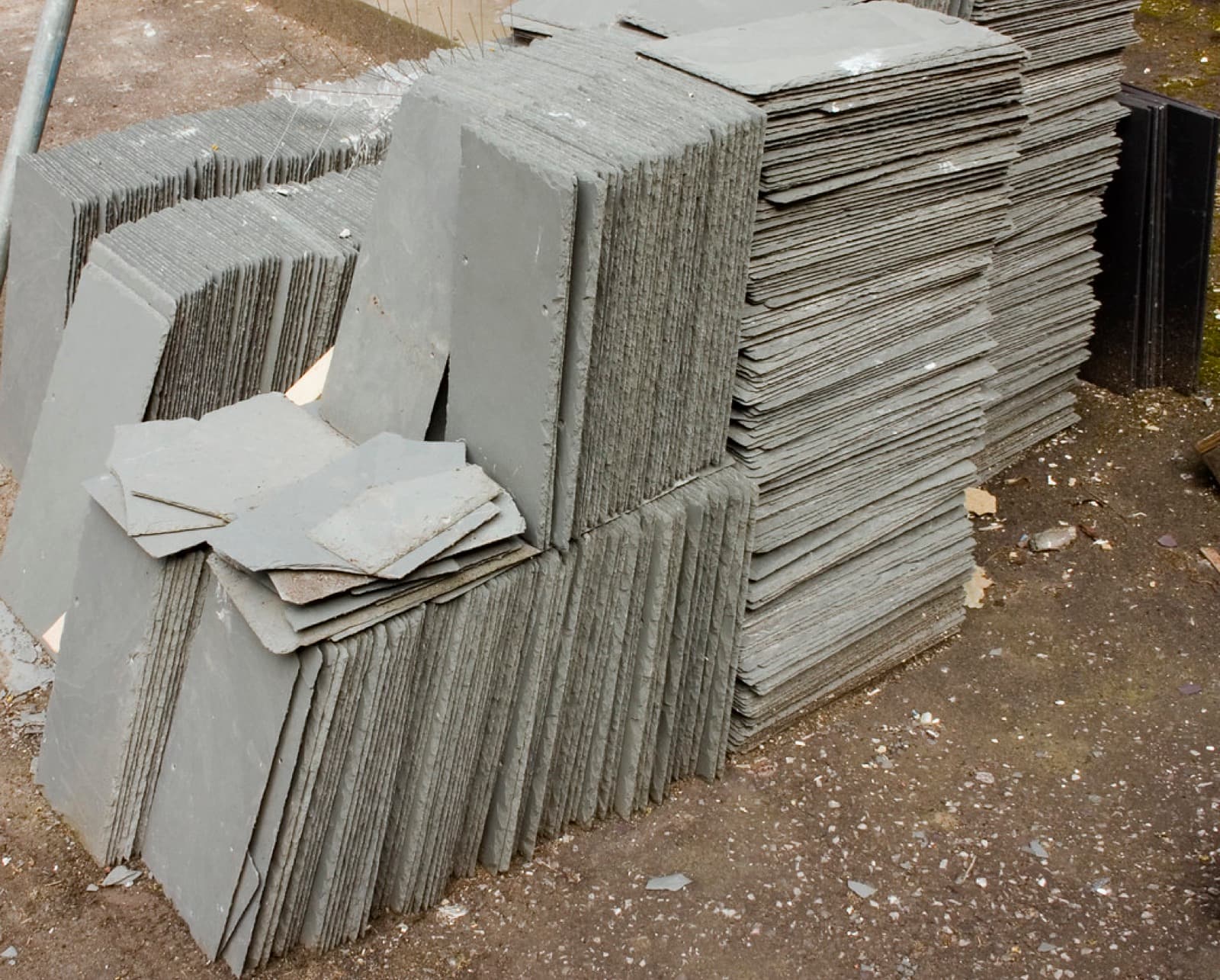
- Slate and clay roof tiles - Stone lintels, copings, and paving - Cast iron radiators and rainwater goods - Hardwood flooring (parquet, strip, plank) - Architectural metalwork (gates, railings, balustrades) - Stained glass and period joinery - Steel beams and columns (RSJs)
Even concrete can be reclaimed in block or slab form for specific applications, though this is less common due to handling costs.
- Bricks
- Lime-mortared bricks clean easily for reuse. Check for frost damage and salt contamination.
- Structural timber
- Beams, joists, and floorboards. Grading confirms structural capacity.
- Natural stone
- Flagstones, lintels, and copings. Effectively permanent if undamaged.
- Roof slates & tiles
- Reclaimed Welsh slate is prized. Often higher quality than new alternatives.
- Structural steel
- Can be retested to current standards. Bolted connections aid recovery.
- Architectural ironmongery
- Radiators, fireplaces, and hardware. High reuse value, strong salvage market.
Sourcing reclaimed materials
Specialist reclamation yards are the primary source. The Salvo directory lists hundreds of UK dealers, and many now sell online with delivery. Architectural salvage fairs and auctions are another route, particularly for decorative items.
For larger quantities - structural steel, timber, or bricks - work with demolition contractors who practise selective deconstruction rather than wholesale demolition. Some contractors now offer pre-demolition audits that catalogue recoverable materials before a building comes down.
Timing matters. Reclaimed materials are available in batches, not continuous supply. If your project needs 10,000 matching bricks, you may need to source from multiple yards or wait for the right demolition to come through. Early specification and flexible procurement timelines help.
Online marketplaces and material passports are emerging tools. Platforms that catalogue materials from buildings due for demolition allow architects and contractors to reserve stock before deconstruction begins.
Grading and certification
Reclaimed structural timber must be graded before use in load-bearing applications. Visual stress grading to BS 4978 or BS 5756 can be performed by qualified graders, and machine grading is also available for larger batches.
Reclaimed steel beams should be tested to confirm their grade (typically S275 or S355) if mill certificates are unavailable. Non-destructive testing methods like hardness testing or chemical analysis can establish the steel grade without damaging the section.
Reclaimed bricks should be assessed for frost resistance, compressive strength, and salt content. Reputable dealers sort bricks into grades - engineering quality, facing quality, and garden/landscape quality.
For heritage and conservation projects, reclaimed materials may be required to match existing fabric. In these cases, provenance documentation - knowing where the material came from and its approximate age - adds specification value.
There is no single certification scheme for reclaimed materials, but suppliers who document provenance, test results, and grading provide the confidence needed for specification.
Specifying reclaimed materials
Writing specifications for reclaimed materials requires flexibility. Unlike new materials with consistent factory-controlled properties, reclaimed stock varies batch to batch.
Good practice includes:
- Specifying performance requirements rather than prescriptive standards where possible - Allowing for visual variation (colour, texture, patina) as a feature, not a defect - Including a tolerance for wastage - reclaimed bricks may have a 10-15% rejection rate after cleaning - Requiring grading certificates for structural timber and steel - Naming acceptable sources or requiring provenance documentation
For BREEAM-assessed projects, reclaimed materials contribute to Mat 01 (lifecycle impacts) and can support Wst 01 (construction waste management) credits. Document the source, quantity, and carbon saving for each reclaimed element.
Some specifiers use a "reclaimed first" hierarchy: specify reclaimed as the primary option with new as the fallback, rather than the other way around.
Decision table for common reclaimed materials
Use this as a first filter before spending time sourcing a batch. The practical question is not whether reuse is good; it is whether this particular batch can do this particular job.
| Material | Good reuse applications | Evidence or inspection needed |
|---|---|---|
| Bricks | Facing repairs, garden walls, paths, non-critical masonry | Frost resistance, salts, dimensions, wastage allowance |
| Structural timber | Beams, joists, posts where engineer-approved | Stress grading, moisture content, defects, treatment history |
| Steel sections | Structural reuse where testing is practical | Grade confirmation, section condition, coatings, engineer sign-off |
| Flooring | Parquet, boards, patch repairs, feature floors | Thickness, adhesive residue, cupping, enough matching material |
| Roof slate and clay tiles | Heritage repair and small roofs | Cracks, fixing holes, frost damage, matching profile |
| Architectural fittings | Doors, handles, radiators, ironwork, decorative reuse | Lead paint, missing parts, corrosion, safe operation |
Practical considerations
Cost is variable. Reclaimed oak beams and period bricks can cost more than new equivalents due to labour-intensive recovery and cleaning. Reclaimed steel and standard bricks are often cheaper than new, especially when transport distances are short.
Insurance and warranty arrangements differ from new materials. Most reclaimed suppliers sell on an "as seen" basis, though reputable dealers will replace defective stock. For structural applications, the engineer of record takes responsibility for specifying appropriate testing and safety factors.
Storage and handling matter. Reclaimed timber should be stored under cover and allowed to acclimatise. Reclaimed bricks are heavier than new (they retain old mortar) and need careful stacking. Plan site logistics accordingly.
Contamination is a consideration for some reclaimed materials. Timber from industrial buildings may contain embedded metal fixings or chemical treatments. Steel may have paint coatings that require testing for lead content before cutting or welding. Always assess contamination risk as part of the sourcing process.
Site logistics checklist
Reclaimed materials often fail because the batch is good but the logistics are not planned. Check the practicalities before committing.
- Confirm dimensions, quantity, wastage allowance, and whether more can be sourced later.
- Plan cleaning, sorting, grading, and rejection time before installation starts.
- Check delivery access, weight, pallet size, lifting needs, and protected storage.
- Keep provenance notes, test certificates, batch photos, invoices, and delivery tickets together.
- Agree who accepts visual variation: client, architect, contractor, and installer.
- Allow a fallback material if the reclaimed batch is smaller or more variable than expected.
The bigger picture
Reclaimed materials are one part of a broader shift toward circular construction. Design for disassembly, material passports, and pre-demolition audits are creating the infrastructure for materials to flow between buildings rather than from quarry to landfill.
For projects where reclaimed materials are not practical in large quantities, consider hybrid approaches: reclaimed timber feature walls with new structural timber, reclaimed brick slips over new blockwork, or salvaged ironmongery on new joinery.
Every reclaimed element displaces a new one. Even small quantities - a set of reclaimed door handles, a run of salvaged radiators - reduce demand on virgin resources and keep embodied carbon out of the atmosphere.
Useful links
- SalvoWEB - reclamation and salvage directoryDirectory and marketplace for architectural salvage, reclamation yards, and reusable building materials.
- futuREuse directoryUK and Ireland directory of reclamation businesses and reuse specialists compiled by Salvo.
- SurplusBuilder - reclaimed building materialsMarketplace for surplus, reclaimed, and end-of-line construction stock in the UK.
- UKGBC - Circular Economy: reusing products and materialsPractical guidance for reusing construction products and materials in built assets.
- UKGBC - circular economy guidance for construction clientsClient-side guidance for briefing circular economy principles into construction projects.