Masonry & Stone · Clay bricks
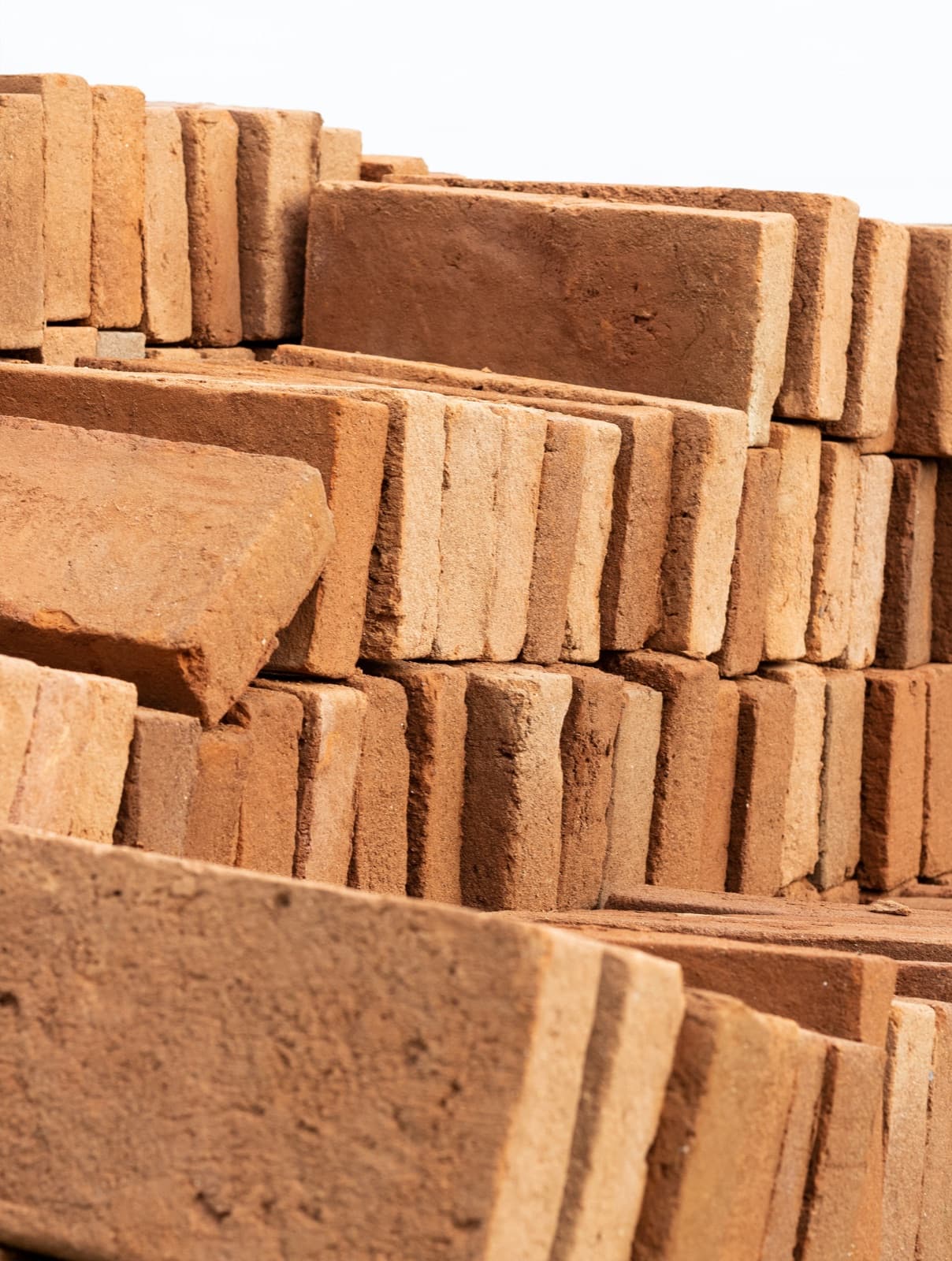
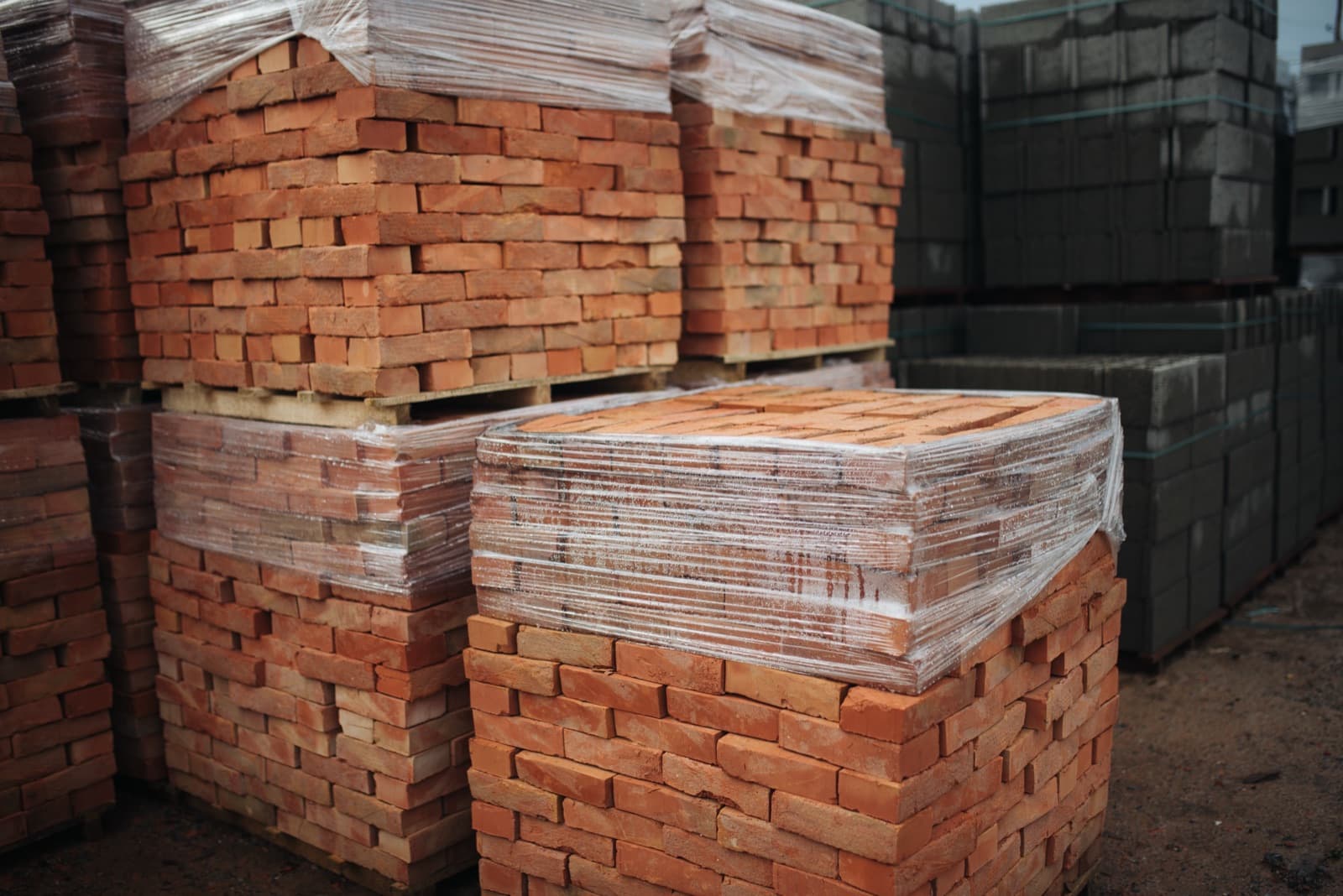
Reclaimed bricks
Herts Architectural Salvage·Pursley Farm
In Stock
Request quote
From reclaimed materials to design for deconstruction and material passports
10 min readUpdated April 2026
Save guideThe construction industry operates on a fundamentally linear model: extract raw materials, manufacture products, build, use, demolish, dispose. Construction consumes roughly half of all raw materials extracted globally and generates about a third of all waste sent to landfill. In the UK alone, the sector produces over 60 million tonnes of waste per year.
A circular economy in construction aims to keep materials in use at their highest value for as long as possible, then recover them for reuse or high-quality recycling rather than downcycling or disposal. It is not a single technology or certification but a design philosophy that affects every decision from concept design through to end-of-life management.
The circular economy hierarchy in construction is: build less (avoid the need) → build with less (optimise design) → build with reused materials → build with recycled materials → design for future reuse → design for future recycling. Each step is preferable to the one below it.
By the numbers. The UK construction industry produces over 60 million tonnes of waste per year. Circular material choices are one of the most direct ways to reduce this figure.
Circular materials sit on a spectrum from directly reclaimed products to newly manufactured items with high recycled content. Understanding the categories helps you match the right approach to each project element.
Reusing materials directly - without reprocessing or remanufacturing - eliminates almost all manufacturing emissions. A reclaimed steel beam reused structurally avoids the 1.5-2.5 tonnes of CO2 that would be emitted making a new one. A reclaimed brick avoids the 0.2-0.5 kg CO2 of firing a new brick.
Tip. Material reuse requires a marketplace and logistics infrastructure. Platforms, salvage yards, and material exchanges are growing but still immature compared to virgin material supply chains. Plan reuse procurement early - it takes longer than ordering new.
Design for deconstruction (DfD) ensures that the building you design today can be a 'material bank' for future projects. The decisions that enable or prevent deconstruction are made at design stage, not at end of life.
| Topic | Detail |
|---|---|
| Mechanical connections over chemical bonds | Bolts, screws, clips, and brackets can be reversed. Adhesives, resins, welding, and composite bonds cannot. Every glued connection creates waste at end of life. |
| Standardised and modular components | Standard steel sections have a reuse market. Bespoke fabrications do not. Standard brick sizes can be reused anywhere. Non-standard formats are limited to niche applications. |
| Separate structural, envelope, and services layers | When systems are independent, one can be removed or replaced without damaging the others. Embedded services (pipework in concrete, wiring in walls) make both the services and the structure harder to recover. |
| Minimise material mixing | A concrete slab with embedded steel mesh is harder to recycle than one with separate reinforcement. Composite cladding panels (metal + insulation + vapour barrier bonded together) cannot be separated for recycling. |
| Design for access | Components must be physically reachable for removal. Allow adequate space for tools and handling. Consider disassembly sequence: can the cladding be removed without disturbing the structure? |
| Over-design connections (slightly) | A bolted connection designed with slightly more tolerance allows for easier removal despite decades of corrosion, paint build-up, or minor misalignment. |
A material passport is a digital record of the materials, components, and products in a building. It documents what is there, where it came from, how it is connected, and how it can be recovered. Without this information, buildings become 'material graveyards' where valuable resources are entombed because nobody knows what is inside.
| Topic | Detail |
|---|---|
| What to record | For each major element: material type, manufacturer, product reference, quantity, date of installation, expected service life, connection method, relevant certifications, EPD data, and any hazardous substance content. |
| BIM as a starting point | Building Information Models already contain much of this data. Extending BIM to include circularity data (disassembly sequence, recovery value, recycling route) creates a usable material passport without starting from scratch. |
| Platforms and standards | Madaster (Netherlands, expanding to UK) provides a material passport platform. The EU is developing a Digital Product Passport standard that will apply to construction products. Early adoption positions you ahead of regulation. |
| Handover and access | The material passport must be handed to the building owner and maintained through the building's life. Information that exists only on the designer's server is useless when the building is deconstructed 60 years later. |
| Value at end of life | A material passport transforms demolition waste into a defined inventory of recoverable materials with known properties and quantities. This enables pre-demolition audits and targeted material recovery. |
Note. The Ellen MacArthur Foundation estimates that applying circular economy principles to the built environment in Europe could reduce CO2 emissions from construction materials by 38% by 2050.
Recycling is better than landfill, but it is not equivalent to reuse. Understanding the hierarchy helps you specify for the best possible end-of-life outcome.
The waste hierarchy - aim for the top
Reuse
Highest value
High-quality recycling
Material retained
Downcycling
Reduced quality
Energy recovery
Incineration
Landfill
Lowest value
| Topic | Detail |
|---|---|
| Reuse (highest value) | The material is used again in its current form with minimal processing. A reclaimed steel beam reused structurally. Carbon saving: ~95% of manufacturing emissions avoided. |
| High-quality recycling | The material is reprocessed into a product of equal or similar quality. Steel melted in an EAF to produce new steel. Flat glass recycled back into flat glass. Carbon saving: 60-80% of virgin manufacturing emissions avoided. |
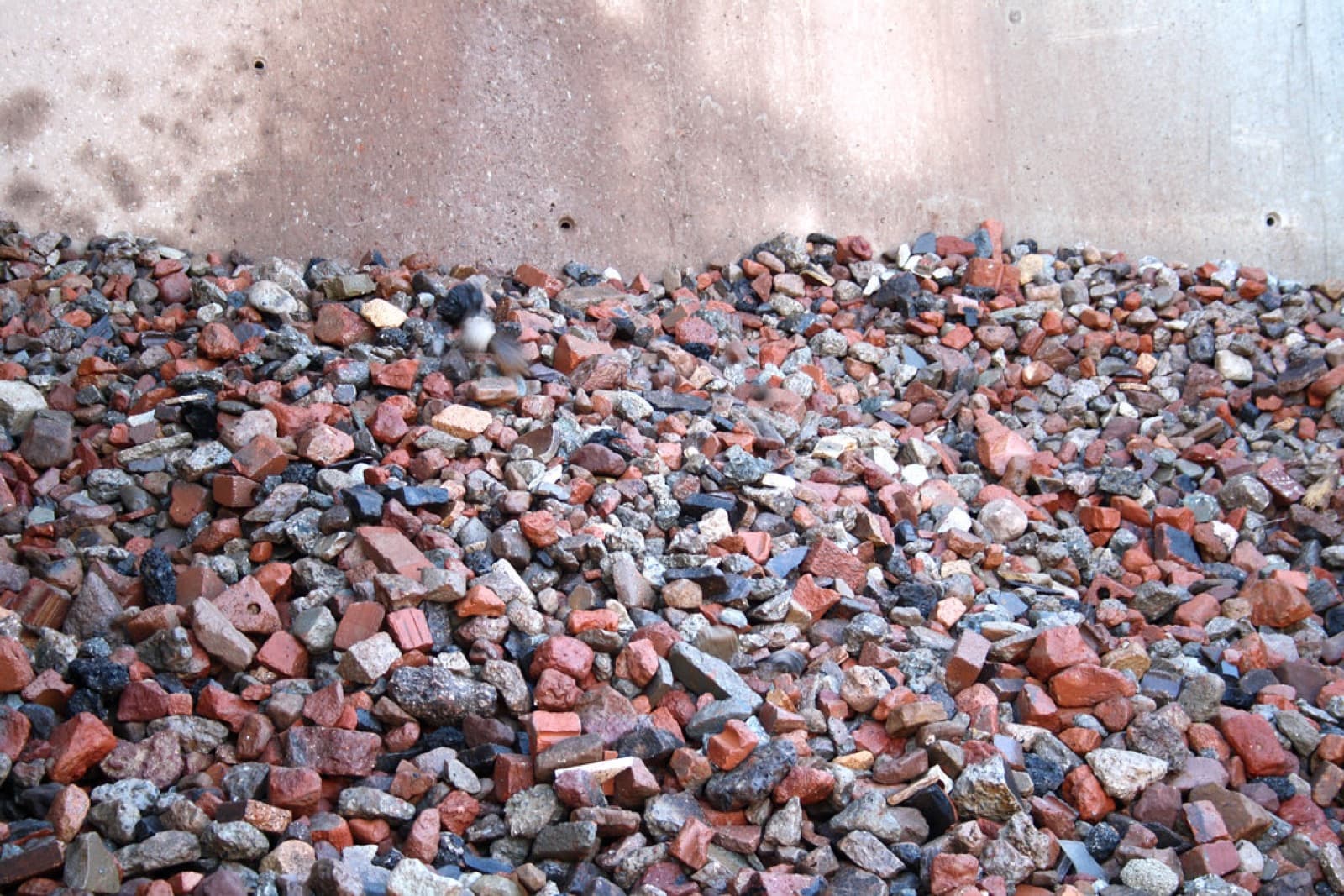
| Downcycling | The material is reprocessed into a lower-value product. Concrete crushed into aggregate. Timber chipped into particleboard. Useful, but the material cannot be upcycled again without significant energy input. |
| Energy recovery | The material is burned to generate energy, displacing fossil fuel. Timber used as biomass fuel. Plastic waste in energy-from-waste plants. The material is consumed and exits the material cycle permanently. |
| Landfill (lowest value) | The material is disposed of. No material or energy value is recovered. Landfill tax makes this increasingly expensive, which is driving investment in the higher tiers. |
Circular materials face real-world challenges that need practical solutions, not idealism. Cost, availability, compliance, and client confidence are the most common friction points.
| Topic | Detail |
|---|---|
| Cost premium | Reclaimed materials can cost more upfront but often reduce waste disposal fees - present the whole-life cost picture |
| Supply variability | Reclaimed stock is inherently variable - build flexibility into specifications and engage salvage suppliers early |
| Certification gaps | Some reclaimed materials lack modern test certificates - work with BBA or equivalent bodies for case-by-case approval |
| Client hesitation | Use case studies and precedent projects to build confidence - the evidence base is growing rapidly |
Several certification frameworks help verify circularity claims. These are the most relevant for UK and European construction projects.
| Topic | Detail |
|---|---|
| Cradle to Cradle Certified | Assesses material health, circularity, and responsible manufacturing |
| ISO 14021 | Self-declared environmental claims including recycled content |
| EPD (Environmental Product Declaration) | Lifecycle data that reveals end-of-life impacts and recycling potential |
| BREEAM Mat 03 | Credits for responsible sourcing and circular procurement |
You do not need to make every element circular to make progress. Start with the highest-impact opportunities and build from there.
| Topic | Detail |
|---|---|
| Conduct a pre-demolition audit | If your project involves demolition, assess what can be recovered before starting. This audit should happen at feasibility stage, not after the wrecking ball arrives. |
| Set a reuse target | Even 5-10% reused material content by value is a meaningful start. Bricks, structural steel, timber, and raised flooring are the easiest categories to begin with. |
| Specify lime mortar for masonry | This single decision enables brick reuse in 60-100 years. Cement mortar locks bricks into composite waste. |
| Use bolted steel connections | Specify friction-grip or bearing-type bolted connections instead of welded connections for structural steel. This enables steel section reuse without cutting. |
| Include DfD principles in the project brief | Make it a design requirement from day one, not an afterthought. |
| Request recycled content data | Ask suppliers for actual recycled content figures. Products with high recycled content reduce demand for virgin materials and demonstrate existing circular supply chains. |
| Explore material exchange platforms | Enviromate, Globechain, and local salvage yards can source reclaimed materials for your project. Allow more procurement lead time than for new materials. |
Tip. On Matera, filter by source type to find recycled or bio-based materials. Supplier profiles often include information about take-back schemes and circular credentials.