Concept
How to Spot Damp Before You Start Decorating
Condensation, leaks, rising damp claims, mould, salts, and when not to paint over the problem
6 min readUpdated July 2026
Save guideDo not paint first
If a wall is damp, mouldy, salty, flaky, or repeatedly stained, decorating is not the first job. Paint can hide the symptom for a while, but it can also trap moisture and make the next repair messier.
Watch out. Never use new paint, wallpaper, panelling, or insulation to hide active damp. Find the moisture source first.
Common signs and what they might mean
Different moisture problems can look similar, so treat this as a clue list rather than a final diagnosis.
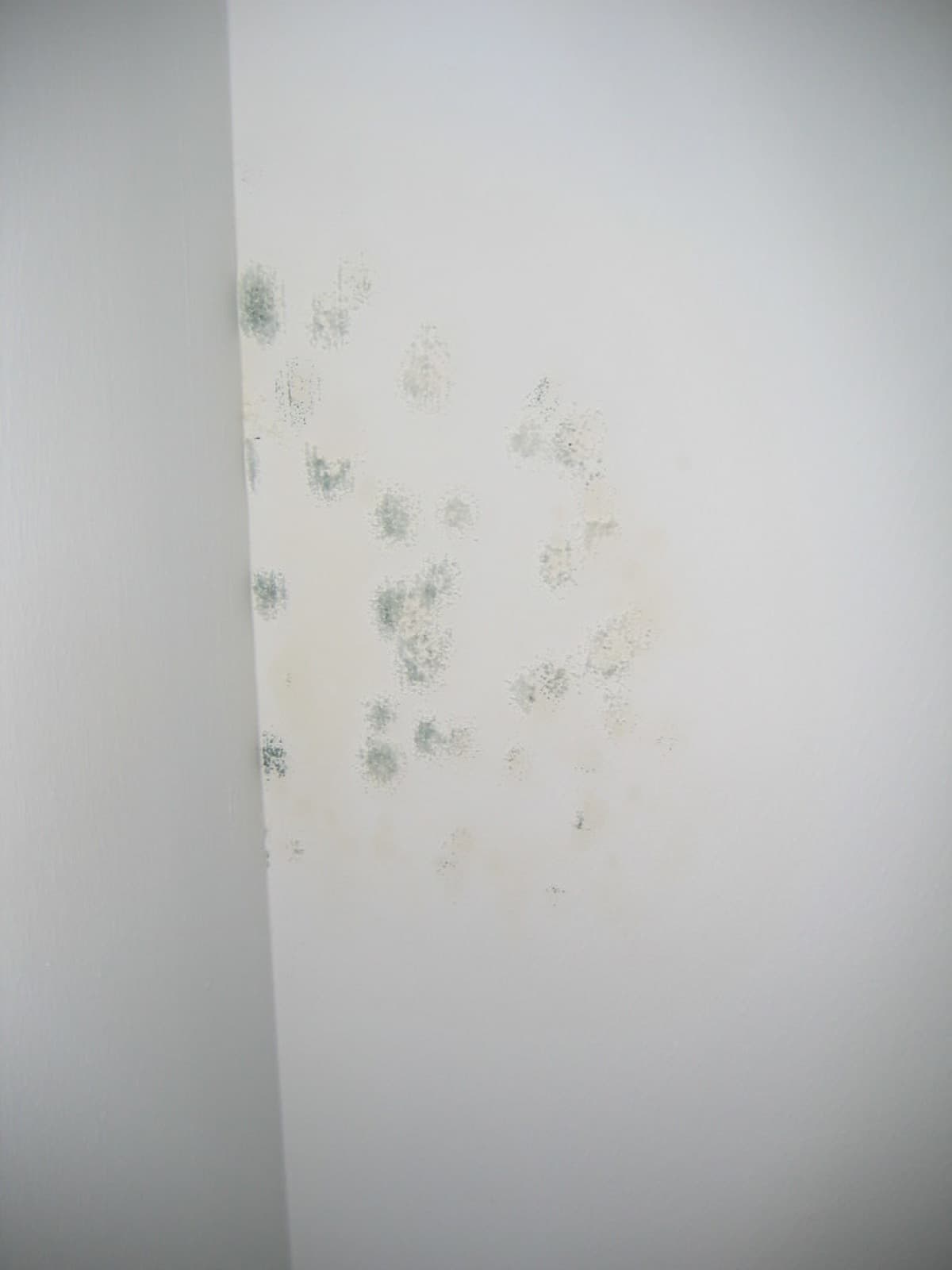
- Black mould on cold corners can mean condensation and poor air movement.
- Brown stains below a roof, window, or pipe can mean a leak.
- White fluffy salts can mean moisture moving through masonry.
- Peeling paint on an old solid wall can mean incompatible paint or trapped moisture.
- Damp patches after rain can mean penetrating damp from outside.
- Persistent damp at floor level has several possible causes, not automatically rising damp.
Safe first steps
Before buying specialist products, do the simple observations.
Before buying anything
- 1
Watch and photograph
Same patch over weeks; note weather and habits
- 2
Check outside
Gutters, downpipes, roof edges, sills, exterior cracks
- 3
Pull furniture back
Slightly away from cold outside walls
- 4
Ventilate
Use extractor fans and open trickle vents
- 5
Get help first
Before adding internal wall insulation
Keep a simple damp diary
A damp diary sounds fussy, but it helps you avoid guessing. Many moisture problems are patterns: after rain, after showers, when furniture is tight to a cold wall, or when heating changes.
- Photograph the same patch every few days in the same light.
- Note recent rain, showering, cooking, drying laundry, and heating use.
- Check whether the mark grows from a corner, a pipe route, a chimney breast, a window, or floor level.
- Mark the edge lightly with pencil if the surface allows it.
- Record any smell, salts, soft plaster, peeling paint, or new mould.
Clues to common causes
This is not a diagnosis, but it helps you decide what to investigate first.
| What you see | Often points toward | First thing to check |
|---|---|---|
| Black mould in corners | Condensation and poor airflow | Ventilation, cold surfaces, furniture position |
| Stain after rain | Leak or penetrating damp | Gutters, downpipes, roof, exterior cracks |
| White fluffy salts | Moisture moving through masonry | Old plaster, outside ground levels, wall drying |
| Peeling paint on old wall | Trapped moisture or incompatible finish | Existing paint type and wall history |
| Damp smell near floor | Several possible causes | Leaks, ventilation, timber condition, outside ground |
What not to do
When damp appears, the tempting fix is often the wrong one.
- Painting over mould
- Paint hides the symptom for a while and can trap moisture.
- Covering damp walls
- No panelling, foil insulation, or vinyl wallpaper over active damp.
- Assuming rising damp
- Low-level damp patches have several possible causes, not one.
- Blocking vents
- Do not close air bricks or vents to make a room warmer.
- Hard cement repairs
- Old soft brick or stone needs advice before cement goes on.
- Buying products first
- Look for leaks and condensation causes before dehumidifiers, sealers, or specialist paints.
When to get help
Some signs are worth professional advice before decorating.
- Damp that returns quickly after cleaning.
- Crumbling plaster, rotten timber, or white salts.
- Mould in several rooms.
- Leaks near electrics.
- A listed, period, or solid-wall home.
- Any plan to add insulation to the inside of an external wall.
What to search for on Matera
After the cause is understood, search for breathable paint, lime plaster, clay plaster, natural fillers, low-VOC paint, wood fibre insulation, cork insulation, and suppliers who understand old-house compatibility.