Natural Paints & Finishes
Low-VOC and chemical-free alternatives for healthier interiors
6 min readUpdated April 2026
Save guideWhy natural finishes matter
Conventional paints and finishes are among the most chemically intensive products in a building. Standard emulsion paints contain synthetic binders (acrylic or vinyl), pigment dispersants, biocides, coalescing agents, and volatile organic compounds (VOCs) that off-gas into indoor air for months or years after application.
Indoor air quality is a growing concern in modern construction. Airtight, well-insulated buildings - exactly the kind that perform well thermally - trap pollutants indoors unless ventilation and material selection are carefully managed. Paints cover the largest surface area of any finish in most buildings, making them a significant contributor to indoor air chemistry.
Natural paints and finishes use mineral, plant, or animal-derived ingredients instead of petrochemical synthetics. They typically have very low or zero VOC emissions, are breathable (allowing moisture vapour to pass through walls), and are biodegradable at end of life.
Types of natural finish
Lime wash is one of the oldest finishes in construction. Made from slaked lime (calcium hydroxide) and water, with optional natural pigments, it produces a characteristically chalky, matte surface that develops depth and variation over time.
Lime wash is naturally antibacterial, breathable, and absorbs CO2 as it carbonates. It works best on lime plaster, stone, and brick - not plasterboard or previously painted surfaces.
Clay paint uses natural clay as both binder and pigment. It produces a velvety matte finish with exceptional depth of colour. Clay paints are zero-VOC, breathable, and can help regulate indoor humidity by absorbing and releasing moisture. They are suitable for most interior surfaces including plasterboard, plaster, and previously painted walls.
Casein (milk) paint uses the protein casein as a binder. It was widely used before synthetic paints became dominant in the mid-20th century. Modern casein paints produce a durable, breathable finish with a soft sheen. They are naturally antistatic (repelling dust) and bond well to wood, plaster, and masonry.
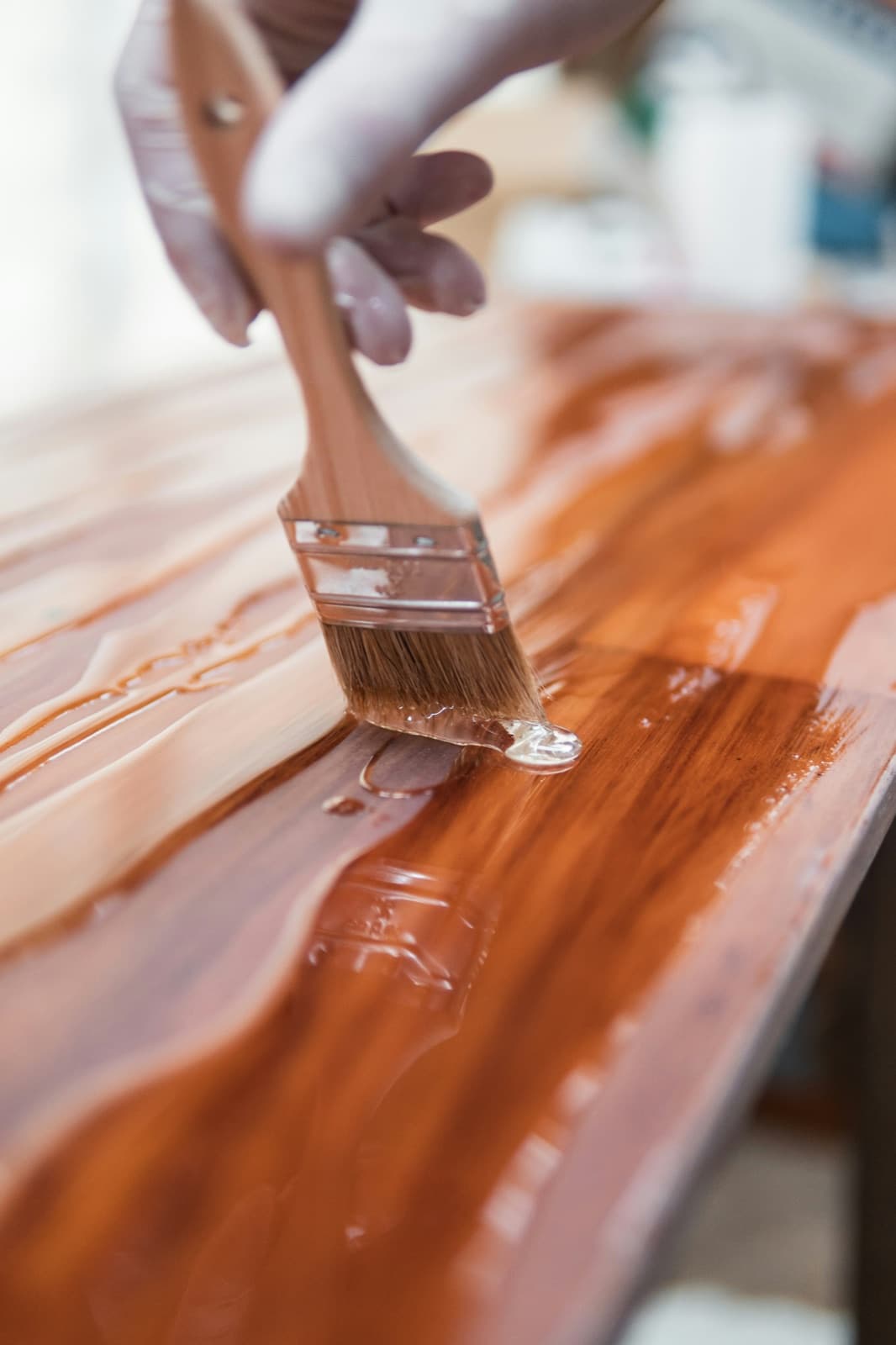
Plant oil finishes - linseed, tung, and hemp oil - are used primarily on wood. They penetrate the timber surface rather than forming a film on top, preserving the natural texture and grain. Hard-wax oils combine plant oils with natural waxes (carnauba, beeswax) for a more durable, wipeable finish.
Mineral silicate paint uses potassium silicate (waterglass) as a binder. It chemically bonds to mineral substrates (concrete, render, stone) rather than sitting on the surface as a film. Silicate paints are extremely durable, UV-stable, breathable, and fireproof. They are widely used on heritage buildings across Europe.
- Clay paint
- Made from natural clays and mineral pigments. Excellent coverage, breathable, zero VOC.
- Linseed oil paint
- Traditional oil-based finish. Long-lasting on wood and metal. Slow-drying.
- Lime wash
- Slaked lime and water. Naturally antifungal and breathable. Ideal for historic buildings.
- Natural wood oils & waxes
- Tung oil, beeswax, carnauba wax. Feed and protect timber without film-forming.
- Casein (milk) paint
- Protein-based binder. Matte finish with excellent adhesion to porous surfaces.
- Silicate (mineral) paint
- Potassium silicate binder. Bonds chemically to masonry. Extremely durable.
Performance compared to conventional paints
Natural paints perform differently from conventional products, and understanding these differences is essential for successful specification.
Coverage and opacity vary. Clay and lime paints often require three coats where a conventional emulsion might need two. Mineral silicate paints typically achieve full coverage in two coats. Factor additional coats into cost and programme estimates.
Drying time is generally longer. Lime wash needs 24 hours between coats and should not be applied in direct sunlight or frost. Clay paints dry quickly (2-4 hours) but need longer curing times. Plan application schedules accordingly.
Durability depends on the product and application. Mineral silicate paints are among the most durable finishes available - lasting 20-30 years on exterior masonry. Lime wash is less durable on high-traffic surfaces but is easily retouched. Clay paints are durable for interior use but not suitable for wet rooms without appropriate sealing.
Colour range has improved significantly. Early natural paints were limited to earth tones, but modern manufacturers offer broad palettes. Lime and clay finishes have a particular quality of colour - softer and more luminous than synthetic equivalents - that many architects specifically seek.
Moisture management is where natural finishes excel. Breathable finishes allow walls to absorb and release moisture vapour, reducing condensation risk and supporting healthy indoor humidity levels. This is particularly valuable in older buildings with solid walls where trapping moisture behind impermeable paint can cause damp and decay.
When to specify natural finishes
Natural finishes are particularly well-suited to:
- Heritage and conservation projects where breathability is essential to protect historic fabric - Schools, nurseries, and healthcare settings where indoor air quality directly affects occupant health - Residential projects targeting Passivhaus or WELL certification - Projects using natural plasters (lime, clay, hemp-lime) where a breathable finish preserves the wall system's moisture performance - Any project where the client values low-toxicity interiors
They may not be the best choice for:
- High-moisture environments (commercial kitchens, swimming pools) without specialist formulations - Surfaces requiring frequent heavy cleaning with chemical agents - Extremely tight programme schedules where extended drying times cannot be accommodated - Substrates that are incompatible - lime wash on plasterboard, for instance, requires a specialist primer
Hybrid approaches work well. Use mineral silicate or clay paint on main wall surfaces, and a low-VOC conventional paint in wet rooms and high-traffic areas where scrub resistance matters most.
Costs and sourcing
Natural paints typically cost more per litre than standard emulsions. A litre of quality clay paint costs roughly twice as much as a mid-range conventional emulsion. Mineral silicate paints are three to four times the price of standard masonry paint.
However, lifecycle costs can be competitive. Mineral silicate finishes last significantly longer than acrylic masonry paint, reducing maintenance frequency. Lime wash is inexpensive per coat and easy to reapply. When factoring in durability, maintenance cycles, and the avoided cost of mechanical ventilation to manage VOC off-gassing, natural finishes often represent good value.
UK suppliers include Earthborn (clay paints), Lakeland Paints (lime wash), Auro (plant-based paints), Beeck (mineral silicate), and Graphenstone (lime-based with graphene). Many smaller regional producers also offer lime wash and clay finishes.
Lead times are generally short - most products are available from stock. For large commercial quantities or custom colours, allow 2-4 weeks for production.
On Matera, search for natural paints and finishes by category or filter by certification. Many natural paint manufacturers hold EPDs and Declare labels, making verification straightforward.
Application and practical tips
Surface preparation is critical for all natural finishes. Lime wash requires a damp, alkaline substrate - mist the wall with water before each coat. Clay paint needs a clean, dust-free surface with a suitable primer on new plasterboard. Mineral silicate paint requires a mineral substrate free of previous acrylic or oil-based coatings.
Application technique differs from conventional painting. Lime wash is applied with a large masonry brush in thin, overlapping strokes - not rolled. Clay paint can be brushed or rolled but benefits from cross-hatching for an even finish. Plant oils are applied with a cloth or brush and excess wiped off after penetration.
Temperature and humidity matter more than with conventional paints. Most natural finishes should be applied between 8-25°C. Lime products need humidity above 60% to carbonate properly. Avoid application in direct sunlight, wind, or frost.
Sample panels are essential. Natural finishes look and feel different from synthetic equivalents. Always apply a sample panel on the actual substrate in the actual space before committing to large-scale application. Colours can shift significantly between wet application and full cure.
Maintenance is straightforward. Lime wash can be recoated directly. Clay paint can be touched up - new paint blends with existing. Oil finishes can be refreshed by applying another coat. The ease of maintenance is one of the strongest practical arguments for natural finishes.
Choosing the right natural finish
The best finish depends on the surface, room, and amount of wear. Use this as a first pass before checking the manufacturer's system guidance.
| Finish | Best suited to | Watch out for |
|---|---|---|
| Clay paint | Bedrooms, living rooms, offices, plasterboard, low-wear walls | Scuffing in high-traffic areas and splash zones |
| Limewash | Lime plaster, stone, brick, heritage walls | Poor compatibility with sealed modern paints and plasterboard |
| Mineral silicate paint | Exterior masonry, render, mineral substrates | Needs compatible mineral background and careful prep |
| Casein paint | Interior plaster, timber, furniture, traditional finishes | Mixing, shelf life, and moisture exposure |
| Plant oil / hard-wax oil | Timber furniture, floors, shelves, worktops | Curing time, rag safety, food-contact suitability |
Common failures and how to avoid them
Natural finishes are rarely the problem on their own. Most failures come from using the right finish on the wrong background or rushing preparation.
| Topic | Detail |
|---|---|
| Patchy limewash | Usually caused by uneven suction, dry substrate, or applying coats too thickly. |
| Clay paint rubbing off | Check primer, surface dust, curing time, and whether the room needs a tougher finish. |
| Peeling mineral paint | Often means the background was not mineral or was contaminated with old coating. |
| Sticky oil finish | Excess oil was not wiped off or curing conditions were poor. |
| Mould returning | The finish cannot solve condensation, leaks, or poor ventilation on its own. |