Timber & Wood
Moisture resistant chipboard
R.P. Panels Ltd.·Unit 3 New England Estate, Hoddesdon
In Stock
Request quote
Indoor air quality certification for construction products
5 min readUpdated April 2026
Save guideGreenguard is a third-party certification programme that tests products for chemical emissions into indoor air. It is administered by UL (Underwriters Laboratories) and sets limits on the concentration of volatile organic compounds (VOCs) and other pollutants that a product can release.
The certification is based on chamber testing: a product sample is placed in a controlled environment, and the air is analysed over a set period to measure emissions of specific chemicals. Products that meet the emission limits are certified.
Greenguard is one of the most widely recognised indoor air quality certifications globally. It is referenced by LEED, WELL, BREEAM, and other green building rating systems as evidence that products contribute to healthy indoor environments.
There are two certification levels, and the difference matters for specification.
Greenguard
Standard indoor air quality
Products meet emission limits for over 10,000 individual VOCs and total VOCs. Suitable for general commercial and residential use.

Greenguard Gold
Stricter limits for sensitive spaces
Tighter emission thresholds. Required for schools, healthcare facilities, and other sensitive environments. Includes limits on formaldehyde.
Tip. For most construction projects, Greenguard Gold is the level worth specifying. If a product meets Gold, it also meets standard Greenguard. The additional rigour of Gold gives more confidence, particularly for projects targeting WELL or LEED credits.
Greenguard testing covers a specific set of chemical emissions. Understanding the scope helps you know what it does and does not guarantee.
| Topic | Detail |
|---|---|
| Total volatile organic compounds (TVOC) | An aggregate measure of all VOC emissions from the product |
| Formaldehyde | A common indoor pollutant from adhesives, resins, and composite wood products. Greenguard Gold sets a limit of 0.05 mg/m³, well below many regulatory thresholds. |
| Individual VOCs | Limits on specific chemicals including acetaldehyde, toluene, and other compounds known to affect indoor air quality |
| Particulate matter | For some product categories, particle emissions are also measured |
Watch out. Greenguard tests for chemical emissions into air. It does not test for material health (what the product is made of), toxicity in other pathways (e.g. skin contact, ingestion), or environmental impact during manufacturing or disposal. For material health transparency, look for Declare labels or Cradle to Cradle certification alongside Greenguard.
Greenguard certification is most relevant for products that are used indoors and can affect air quality through off-gassing. The most commonly certified product categories in construction include:
| Topic | Detail |
|---|---|
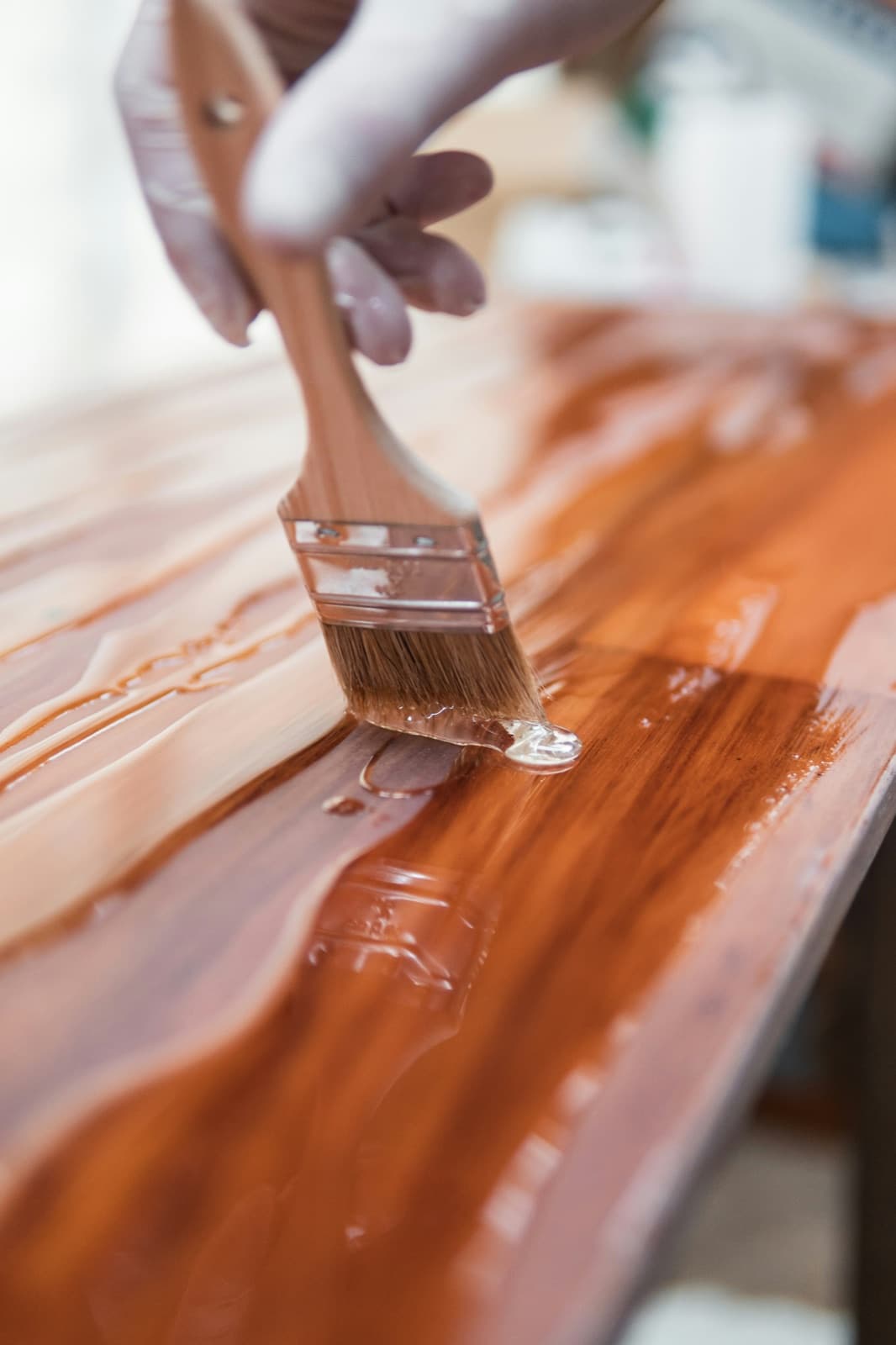
| Paints, coatings, and sealants | Products applied in liquid form that release VOCs as they cure |
| Adhesives and mastics | Used in flooring, tiling, and panel installation |
| Insulation | Particularly spray foam and rigid board products used in interior applications |
| Composite wood products | Plywood, MDF, OSB, and other panels that may contain formaldehyde-based resins |
| Flooring | Resilient flooring, carpet, engineered wood, and laminate |
| Ceiling tiles and wall panels | Acoustic and decorative interior products |
| Furniture and fixtures | Desks, cabinetry, and built-in storage |
Greenguard certification is recognised as compliance evidence across several green building rating systems.
| Topic | Detail |
|---|---|
| LEED v4/v4.1 | Greenguard Gold satisfies the low-emitting materials credit (EQ Credit: Low-Emitting Materials) for applicable product categories |
| WELL Building Standard | Greenguard Gold meets the VOC emission requirements under the Air concept |
| BREEAM | Low-VOC certifications contribute to Hea 02 (Indoor Air Quality). Greenguard is accepted as evidence of compliance for relevant product types. |
| Living Building Challenge | The Red List-free requirement focuses on material ingredients rather than emissions, so Greenguard alone is not sufficient. However, it demonstrates emissions performance alongside a Declare label. |
Greenguard verification is straightforward because UL maintains a public product directory.
Find the product in the UL database
Search for the product at UL SPOT to confirm the certification is current.
Check which level is certified
Confirm whether it's Greenguard or Greenguard Gold - sensitive environments require Gold.
Verify the product variant matches
Certification applies to specific products - ensure the exact variant you're specifying is listed.
Check recertification status
Products are retested quarterly. Confirm the certification hasn't lapsed or been suspended.
Greenguard is a valuable certification, but it has a specific scope. Being clear about its limitations prevents over-reliance.
| Topic | Detail |
|---|---|
| It does not assess embodied carbon | A Greenguard-certified product may have high or low production-stage emissions. These are separate concerns. |
| It does not assess material ingredients | Greenguard measures what comes off the product, not what is in it. For full ingredient transparency, look for Declare or Health Product Declarations (HPDs). |
| It does not assess environmental impact beyond indoor air | Manufacturing pollution, resource depletion, and end-of-life impacts are outside its scope |
| Testing is done in controlled conditions | Real-world emissions may vary depending on temperature, humidity, ventilation rates, and the combination of products in a space |