Timber & Wood · Plywood
Birch Plywood
Specialised Panel Products Ltd.·Unit 8, Hertford
In Stock
Request quote
FSC, PEFC, EPD, Blue Angel and more, without the architect-speak
6 min readUpdated July 2026
Save guideEco labels do not all measure the same thing. Some check where a material came from, some test indoor air emissions, some publish carbon data, and some assess the company behind the product. A label can be useful and still not answer the question you thought it answered.
For homeowners, the easiest approach is to ask: what claim is this label proving? Responsible timber? Low emissions? Ingredient transparency? Whole-product environmental performance? Once you know the job of the label, it becomes much easier to compare products.
Use this as a plain-English first pass when you see a logo on paint, timber, flooring, insulation, furniture, or a supplier profile.
| Label | What it is useful for | What it does not prove |
|---|---|---|
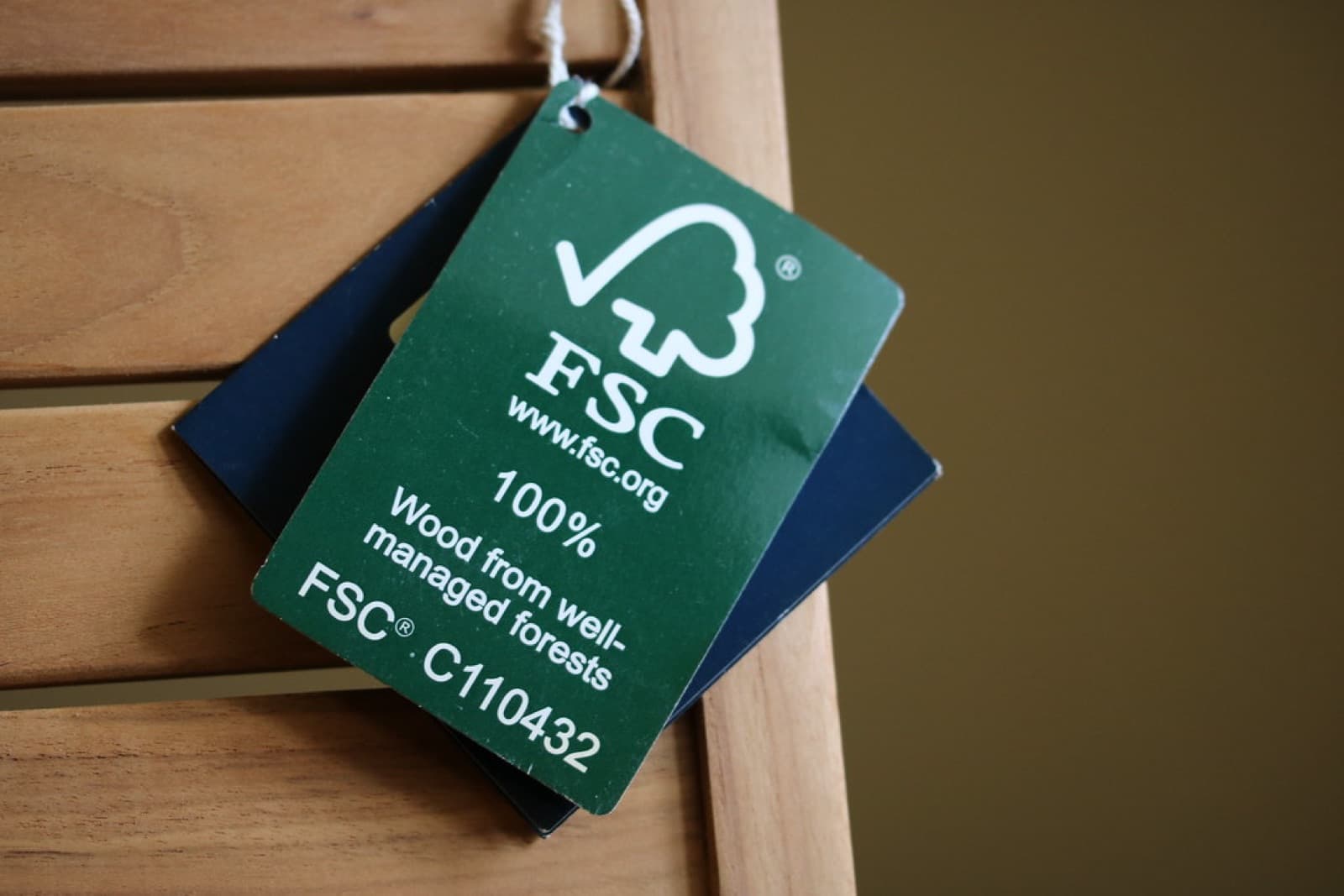
| FSC | Timber, paper, and wood products from responsibly managed forests or recycled sources | Low VOCs, low carbon, or chemical safety |
| PEFC | Responsible forestry and chain-of-custody for timber and wood products | Product emissions or embodied carbon |
| EPD | Transparent lifecycle environmental data, especially embodied carbon | That the product is automatically low-impact or healthy |
| Blue Angel | Strict environmental and health criteria for certain product groups, especially indoor products | That every product category is covered |
| EU Ecolabel | A multi-criteria environmental label for products like paints, flooring, and cleaning products | A specific carbon figure |
| Greenguard | Low chemical emissions into indoor air | Where the material came from or how it was made |
| Declare | Ingredient transparency and Red List screening | Low carbon or low emissions by itself |
| B Corp | Company-level social and environmental performance | That every product made by the company is sustainable |
The right label depends on what you are buying and where it will be used.
| If you're… | Look for |
|---|---|
| Buying timber, plywood, doors, or decking | FSC or PEFC |
| Painting a bedroom, nursery, or home office | Low-VOC information, Blue Angel, EU Ecolabel, or Greenguard |
| Choosing flooring, adhesives, or composite boards | Greenguard, Blue Angel, Declare, or formaldehyde test data, rather than generic green claims |
| Comparing insulation, concrete, plasterboard, or larger building products | An EPD, to understand embodied carbon |
| Choosing between brands with similar products | B Corp or other company-level certification, as a tie-breaker rather than the whole answer |
| Buying reclaimed or second-hand materials | Provenance and condition - labels matter less than inspection |
Tip. No single logo means 'this is the best product'. Good choices usually combine the right label, the right material for the job, and enough product information to avoid guesswork.
Some packaging is designed to feel sustainable without proving much. Treat these claims as a prompt to ask for evidence.
You do not need to become a certification expert. A few checks catch most weak claims.
| Check | What to ask |
|---|---|
| Scope | Does the label apply to this exact product, or just the company? |
| Current status | Is the certificate still valid? |
| Product category | Does the label cover the thing you care about for this product? |
| Public registry | Can you find it on the certifier's website? See the links below. |
| Level | Is it standard Greenguard or Greenguard Gold? FSC Mix or FSC 100%? Declare Red List Free or simply Declared? |
On Matera, use certification filters as a shortcut, then open the material profile to check what the label is attached to. A good product page should show the exact certification, certificate number or document, and which product it applies to. If that is missing, ask the supplier before buying or specifying.