Masonry and stone
Compare lime mortars, lime renders, bricks, blocks, natural stone, and hemp-lime materials from UK suppliers with technical and carbon information.
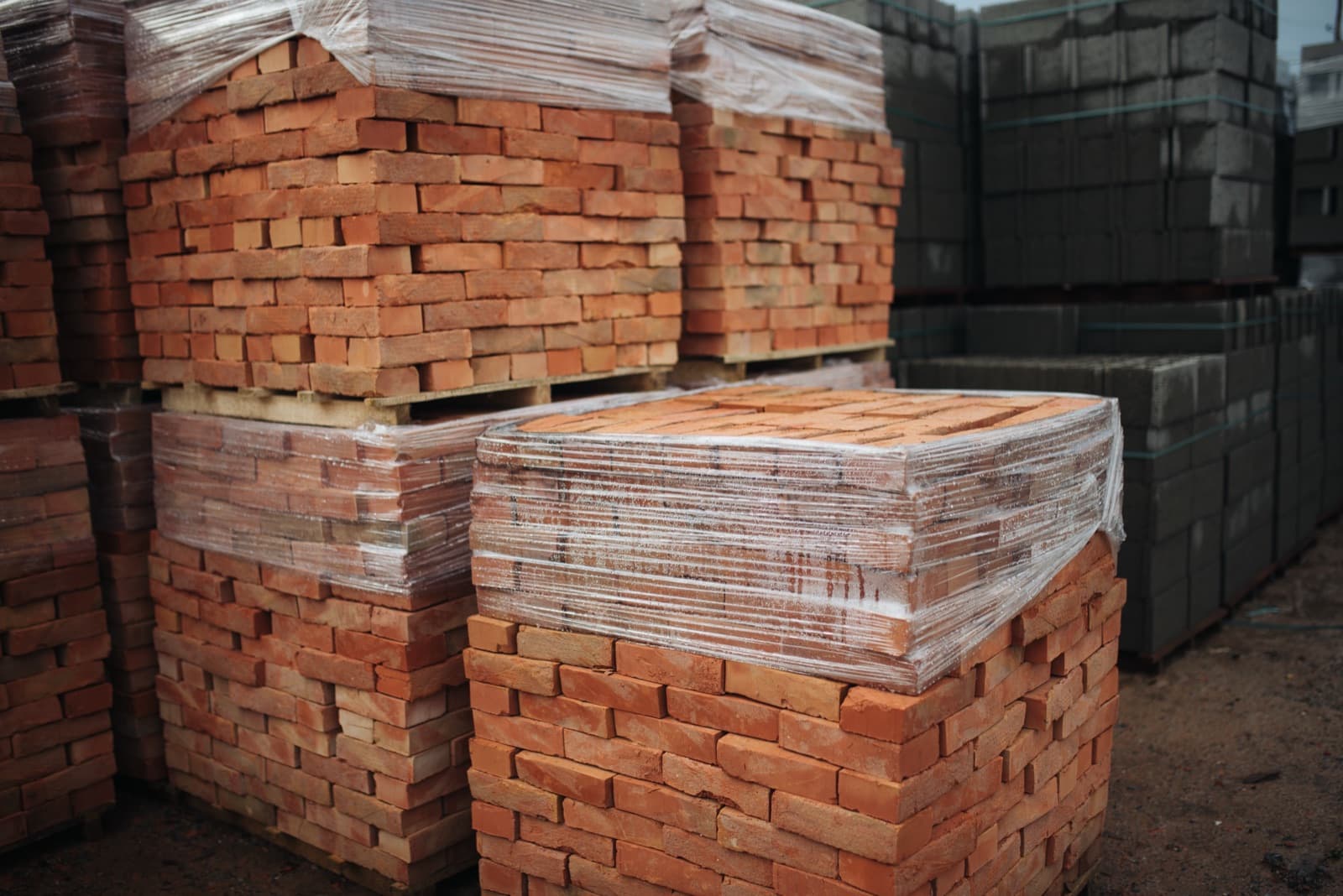
Masonry products are often selected for strength, fire resistance, weathering, thermal mass, and long service life. Their environmental profile varies widely with binder content, firing or curing energy, recycled inputs, transport, durability, and the amount required by the design.
Live masonry and stone listings
Concrete blocks
Block paving
Norbury Fencing & Building Materials·28 Marshgate Drive
In Stock
Request quote
Masonry and stone suppliers
AA
ACS Aggregates
Shangri-La Farm, HertfordshireOpening hours
Stevenage aggregates yard supplying sand, stone, cement, paving, timber sleepers and landscaping materials for trade and DIY projects.
Aggregates & ConcreteLandscaping & Outdoor+2
No materials listed yet
AS
Architectural Salvage Source
Willows Farm
London Colney architectural salvage yard supplying reclaimed building materials, including reclaimed bricks and period construction materials.
Timber & WoodFlooring+3
BM
BP Mitchell
Birchall Lane
Hertfordshire supplier of secondary recycled aggregate building materials, including crushed concrete and Type 1/Type 2 sub-base materials.
Aggregates & ConcreteMasonry & Stone
CB
Camtech Building Products
Camtech House
Royston manufacturer and supplier of architectural masonry construction products, including standard and bespoke masonry, GRC and wet-cast facade products.
Cladding & FacadesMasonry & Stone
ES
Etherow Stone
9 Graphite Business Park
Natural stone supplier covering Hertfordshire, including Yorkstone, sandstone, paving, bespoke masonry, steps, flooring and walls.
Landscaping & OutdoorFlooring+1
G
GrabCo
Mayrose House
Aggregate supplier covering Essex and Hertfordshire with sand, ballast, gravel, Type 1 MOT, limestone, granite and crushed concrete.
Aggregates & ConcreteMasonry & Stone
HD
Hancocks Drainage & Building Supplies
Unit 6Opening hours
Builders' merchant in Bishop's Stortford supplying building materials, timber, drainage, roofing and landscaping products, with delivery within 15 miles.
Timber & WoodInsulation+8
HS
Harvey Stone
Ham Hill Masonry WorksOpening hours
Stonemasons covering Hertfordshire, including Hertford, Hitchin, Hemel Hempstead, St Albans and Stevenage.
Landscaping & OutdoorMasonry & Stone
HA
Herts Architectural Salvage
Pursley Farm
Independent architectural salvage and reclamation supplier with reclaimed bricks, paviours, roof tiles, slates and York stone.
RoofingFlooring+2
What to compare before specifying
Performance and compatibility
Check strength, density, exposure, movement, permeability, and compatibility with adjacent or historic fabric before comparing environmental attributes.
Binder and manufacturing impact
Review cement or lime content, kiln and curing processes, recycled inputs, and product-specific EPD data reported on a comparable basis.
Source, transport, and lifespan
Heavy products make distance important, while local repair skills, expected service life, reuse potential, and maintenance can alter the whole-life result.
Frequently asked questions
Is lime mortar more sustainable than cement mortar?
Lime can offer compatibility, permeability, repairability, and sometimes lower production temperatures, but the result depends on product formulation, quantity, transport, performance, and service life. Compare products and wall systems rather than assuming a universal answer.
Does locally quarried stone always have a low impact?
Shorter transport can help, especially for heavy materials, but quarrying, processing, waste, finish, durability, and installation also matter. Ask for provenance and product-specific environmental information where available.
Can masonry products be compared by price per unit?
Price per brick, block, bag, or tonne may not reflect installed performance. Compare the amount required per square metre, associated mortar or finish, labour, waste, maintenance, and expected service life.
Related guides
Concept8 min read
Embodied Carbon Explained
What it is, why it matters, and how to reduce it through better material choices
Alternatives6 min read
Low-Carbon Material Substitutions
Practical swaps that reduce embodied carbon without compromising performance
Concept8 min read
Reading a Product EPD
A practical walkthrough of what the numbers mean